
What are Employment Advisory Boards?
Employment Advisory Boards (EABs) were launched to advise, support and challenge prisons on their training and employment offer to prisoners and prison leavers. Their goal is to see more people leave prisons and enter sustainable employment.
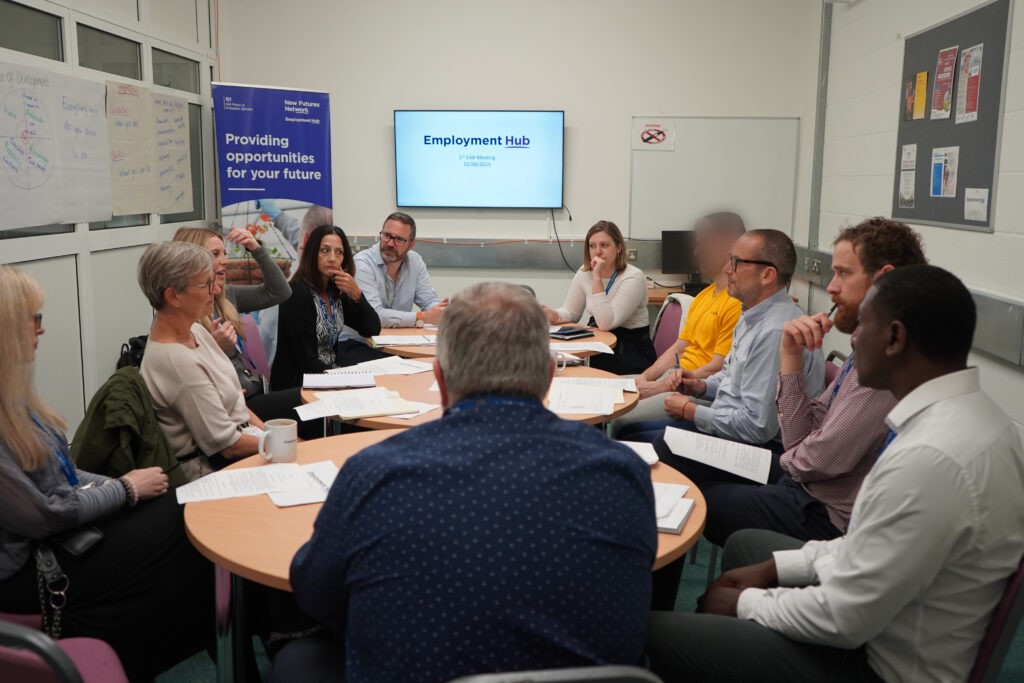
The Boards cover more than 90 prisons across England and Wales, including all resettlement prisons. Each Board is chaired by a business leader from companies such as KPMG, Lotus Cars and Sodexo. They draw membership from their business networks, other leaders within local communities, organisations which support the transition from custody into the community, and people with lived experience.
The concept was the brainchild of James Timpson, Chief Executive of Timpson Group. Employment Advisory Boards are a partnership between His Majesty’s Prison and Probation Service, New Futures Network and The Timpson Foundation.
How they deliver
Employment Advisory Boards work closely with prison Governors and staff working across education, employment and resettlement, to understand where they can add value. Boards can provide support such to:
- Encourage businesses, both national and local, to engage with the prison and offer their resources, connections and knowledge to help those living and working in the prison to prepare for and find work on release.
- The boards link prisons to leading business figures who can offer their expertise on the skills, qualifications, and training, needed to help prisoners re-enter the workforce. Using the insights from Chairs, prisons can tailor their training and workshops to match local labour market demands so prisoners are job-ready when they walk out the prison gate.
- Help develop a positive culture of employment within the prison for long-term employment.
Employment Advisory Board impact
The challenge
For people leaving custody, access to skilled employment can be limited by opportunity rather than ability. At the same time, sectors such as rail continue to face skills shortages.
The EAB at HMP The Mount identified a clear opportunity: to bring employer led, accredited training into the prison and create a genuine pathway from custody into skilled roles in the rail industry.
EAB leadership in action
Alison Bell, People and Communications Director at Project Leaders, and Chair of the EAB at HMP The Mount, brings senior HR leadership directly into the prison environment through The CIPD Trust.
Alison played a pivotal role in shaping and delivering the Railway Training Track – an ambitious, employer led programme designed create a direct route into employment on release.
The Railway Training Track
The Railway Training Track is a collaborative initiative between the prison, the EAB and rail industry partners. A section of railway track has been installed within the prison grounds, allowing participants to complete accredited, industry recognised rail training in a realistic working environment. The programme equips men with practical skills and qualifications aligned to real vacancies in the rail sector, ensuring training is directly connected to employer demand.
Launching the programme
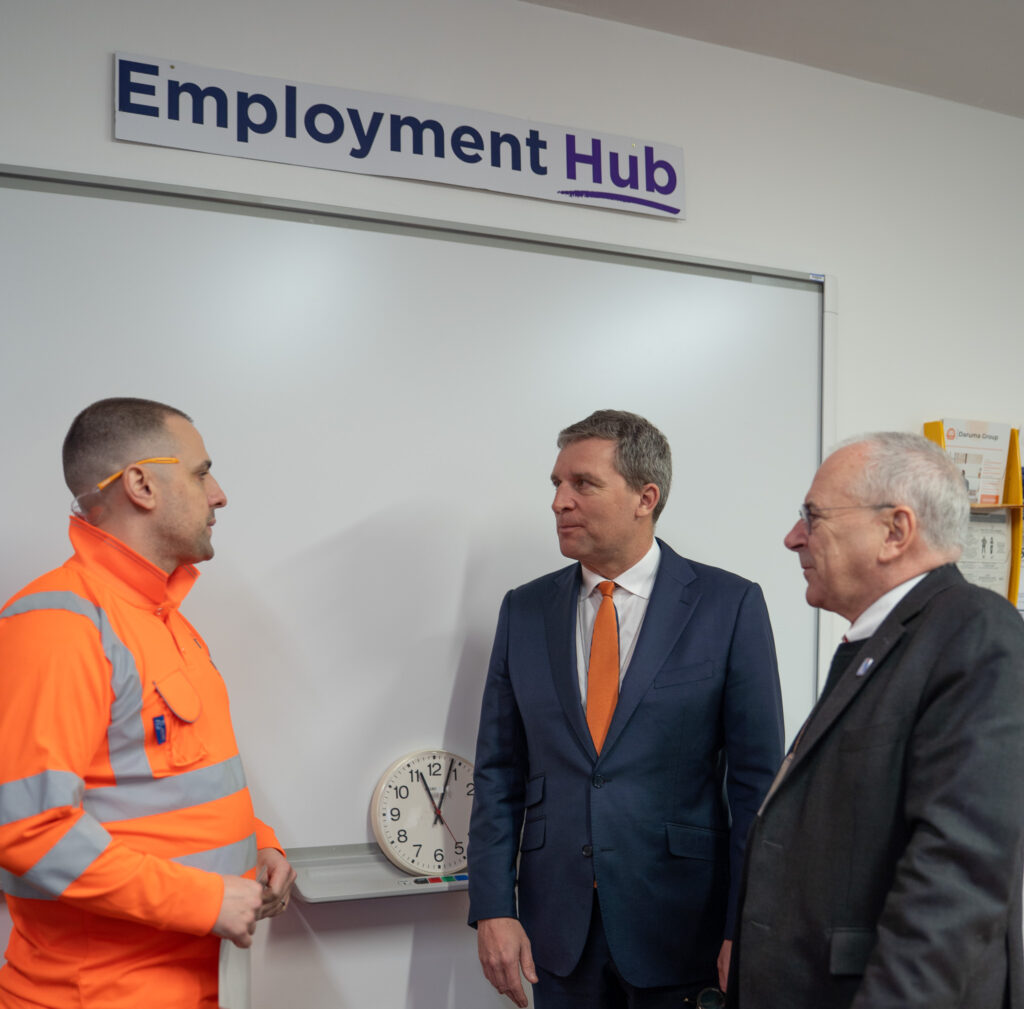
The official launch at HMP The Mount brought together senior leaders from across government, industry and the prison service. Attendees included Lord Timpson, Minister of State for Prisons, Probation and Reducing Re offending, and Lord Hendy, Minister of State for Rail, alongside prison staff, employers and delivery partners. The event highlighted the role employers and HR leaders can play in embedding good employment practice where it is most needed and turning social value commitments into tangible outcomes.
Why it matters
This initiative demonstrates how EABs can:
- Align prison training with industry skills needs
- Bring senior business leadership into supporting rehabilitation
- Create employer confidence through structured, supported pathways
- Move from good intentions to real employment outcomes
Early outcomes
The Railway Training Track is already delivering impact:
- Accredited rail skills training delivered in custody
- Clear pathways into skilled rail roles on release
- Strong employer engagement and commitment to recruitment
Leadership perspective
Reflecting on the programme, Alison Bell, Chair of the EAB at HMP The Mount, said:
“If we are serious about reducing reoffending and addressing skills shortages, we need to move beyond good intentions and create real routes into work. The Railway Training Track initiative was designed to provide a structured pathway from custody into skilled employment by combining accredited training with employer engagement and available job opportunities. As Chair of the HMP The Mount Employment Advisory Board, I would strongly encourage more organisations to step forward and support initiatives like this as part of responsible business leadership and a meaningful, long term commitment to social values.”
What’s next
The EAB at HMP The Mount continues to work with employers and partners to build on the success of the Railway Training Track, with a focus on sustainability, employer take up and long term employment outcomes.
This initiative is a flagship example of how EAB leadership, combined with strong employer commitment and HR expertise, can deliver real change – for individuals, employers and communities.
Overview
Future Horizons is a locally led employment initiative at HMP Norwich that demonstrates the practical impact EABs can have in strengthening employer engagement, improving routes into work, and supporting rehabilitation. Whilst early in its delivery, the project shows how EAB leadership can unlock employer commitment and translate policy intent into tangible outcomes for prisons, employers and individuals.
The role of the EAB
The HMP Norwich EAB has played a central role in shaping and supporting Future Horizons. Chaired by Justin Galliford, Chief Executive of Norse Group, the EAB brought together local employers, prison leadership and delivery partners around a shared objective: improving employment outcomes for people leaving custody. Through the EAB, Norse Group was able to:
- Use its employer networks to open up conversations with local and regional businesses.
- Co-design a practical, employer-facing model that works alongside prison regimes.
- Provide credibility and senior leadership to convene partners and sustain momentum.
This is a clear example of an EAB acting as a catalyst to move advice into practical delivery and employer mobilisation.
What was delivered
Future Horizons was developed as a low cost, employer led solution that responds directly to barriers faced by prisons and businesses alike.
Key elements include:
- A digital platform and brand that enables employers to engage with HMP Norwich in a consistent way.
- Employer engagement events in Norfolk and Suffolk, convened through EAB and business networks.
- Employability support for prisoners, including interview preparation and help with disclosure conversations.
The project aligns closely with the original purpose of EABs: improving education, training and routes into work.
Early impact
Although still in its early stages, HMP Norwich and Future Horizons is already demonstrating positive outcomes:
- Employers have been engaged through EAB led events.
- Norse Group has recruited individuals into operational roles.
Crucially, this has been achieved without reliance on new public funding, instead leveraging EAB leadership and existing capability.
Why this matters
Future Horizons illustrates how EABs can:
- Bridge the gap between prisons and employers.
- Translate national priorities on employment and reducing reoffending into local action.
- Create credible, employer-owned pathways into work.
It also shows how EAB Chairs, in particular, can use their influence to convene partners and pilot approaches that others can learn from.
Huge thanks go to TRO, whose generosity and expertise brought Future Horizons to life. From designing the website, branding and launch events entirely free of charge and playing a vital role in turning an EAB enabled idea into a credible, employer facing initiative.
As EABs continue to mature, this case study provides a strong example of how local leadership can deliver real world impact.
Overview
HMP Durham’s EAB has demonstrated how strong EAB leadership, employer engagement, third sector partnership working and peer-prisoner involvement can translate directly into employment outcomes for people leaving prison.
This work was delivered under HMP Durham EAB’s ‘Employment Outcomes’ work strand, led by the Chair, which focuses on securing high quality, sustainable jobs through meaningful employer relationships.
The approach
As part of this work strand, the EAB oversees ‘Inside Job,’ a unique in-custody, peer-led project that connects motivated prisoners with visiting employers who have genuine job opportunities on release. The project is delivered in partnership with The Recruitment Junction and works closely with trained peer-prisoner recruiters and the Prison Employment Lead (PEL), to identify, prepare and support suitable candidates. The EAB provides strategic direction and employer insight, ensuring that activity aligns with local labour market demand and leads to real vacancies.
What happened
Over a two-month period, Inside Job facilitated interviews for 16 men with two national employers in the construction and environmental services sectors. The outcomes were exceptional:
- 15 of the 16 candidates were invited to second stage interviews on release.
- This was achieved despite the operational pressures of a busy reception prison.
- The first individual released from the cohort has already secured and started employment following their successful second interview in the community.
Employers reported that candidates selected by the peer-prisoner recruiters with the support of the PEL were well prepared, motivated and of a particularly high calibre.
Why this worked
This success was driven by:
- Strong EAB leadership, bringing in employers who could offer genuine jobs on release.
- Close collaboration between the EAB, the PEL and a third sector delivery partner.
- Effective preparation, using peers to match the right candidates to the right opportunities.
The Recruitment Junction praised the impact of combining motivated prison staff, peer led support and committed employers.
Impact
This example shows how EAB led employer engagement can move beyond strategy and into tangible outcomes, turning collaboration into jobs. It demonstrates the value of EABs in aligning prisons, employers and the voluntary sector around a shared goal: improving employment outcomes for people leaving prison.
The challenge
Employers across the UK continue to face skills shortages, while too many people leaving prison struggle to access meaningful employment — despite being motivated, capable and ready to work.
At HMP Drake Hall, the EAB identified a clear opportunity: bring employers together to better understand the benefits of employing prison leavers, challenge misconceptions and create practical routes into work for women preparing for release.
EAB leadership in action
Led by Hoa Ngo, EAB Chair at HMP Drake Hall, the EAB convened partners to design and deliver ‘Untapped Potential’, an employer engagement event focused on the shared benefits of employing prison leavers.
The event was organised by the EAB in partnership with Comensura and brought together employers, public sector partners, third sector organisations and prison leaders to explore how business can play a direct role in reducing reoffending through employment.
The event
The Untapped Potential event created a space for open, practical discussion with employers, grounded in real experience and evidence. The agenda included:
- Employer case studies showcasing inclusive recruitment in action
- Insights from prison leaders and employment specialists
- Contributions from employers already recruiting prison leavers
- Discussion on the business case for second chance employment and how to get started
The event highlighted that employing prison leavers is not just a social good – it is a workforce solution that delivers motivated, loyal and high performing employees.
Through EAB leadership, the Untapped Potential event helped employers to:
- Better understand the realities of recruiting prison leavers
- Hear directly from partners working across prisons and communities
- Learn how support from New Futures Network, prisons and employers can reduce risk and increase success
Outcomes
The event delivered clear early impact:
- Increased employer awareness of prison leaver talent
- Stronger connections between employers, prisons and delivery partners
- Greater confidence among employers to explore inclusive recruitment
- Momentum for further EAB led employer engagement activity
The role of the EAB
This event is a strong example of how EABs can:
- Use business leadership to convene employers at scale
- Influence employer perceptions and behaviour
- Strengthen collaboration between prisons, employers and partners
- Create practical opportunities that improve employment outcomes on release
What’s next
Building on the success of Untapped Potential, the HMP Drake Hall EAB continues to work with employers and partners to convert interest into action – supporting more women to move from custody into sustainable employment. This EAB led approach shows how employer engagement, when driven by business leaders and grounded in partnership, can unlock untapped potential and deliver lasting impact.
For more information, see how Comensura is inspiring change for prison leaver employment with partners across the UK through Untapped Potential.

Employment Councils
Employment Councils bring together local Employment Advisory Board Chairs with senior leaders from Probation and the Department for Work and Pensions (DWP) to strengthen collaboration across regions. Chaired by a dedicated Regional Chair, each Council provides a forum to share best practice, address common challenges, and shape a joined-up regional employment strategy.
For more information, contact us at NewFuturesNetwork@justice.gov.uk